I sometimes come across situations where people are upset about a "cynical" interpretation about a topic -- I regularly encounter
that this cynical assessment aligns with my views -- I usually feel alone in being cynical about a topic. It often
puts me in either the position of the person whos "not fun at parties" or the one who just shuts up about it. It's mostly
the second option. However,
there is one guaranteed topic where a shared cynicism is assured -- When the topic of modern architecture comes up it appears to be one of the
rare exceptions where I strangely don't seem to be in solitude with my cynicism at all.
As a matter of fact, across the entire socio-political spectrum -- all sorts of values and ideologies -- I cannot think of a single person
I have met in my life that thinks positively about modern architecture, from any perspective. With that amount of opposing cross-ideological
consensus how can it be that an issue persists without any backlash? I've been trying to wrap my head around this.
This article is just a rant about this phenomenon, don't expect deep analysis or insightful points -- I am a complete dumbass. It will include more critiques towards the artform of architecture rather than an examination of it's economics. Both are, of course,
interconnected and inseparable. However breaking down socioeconomic factors would go way beyond the scope of my competence, my knowledge and
my time. If I still happen to make any claims I just made the source up. What are you gonna do about it? Now, before any annoying person misunderstands my reductive center of attention towards
aesthetics I'll make something crystal clear: All housing must only belong to the working class and the
bourgeois landlord class should be... Let's not get in trouble with the law, shall we? Mao Zedong and all that fun. You get the point. Okay, enough
with getting angry about a hypothetical person I made up.
Massive boomer rant incoming...
There is an element of mockery towards the "common people" in the design of modern architectural projects. Even in the case of this opinion being untrue, you can undoubtedly assess that there is a complete alienation from the designers of these projects to the people living in them (and also those looking at them). These upper middle class architects receive excitement by placing heinous stupid looking buildings into our cities with a total lack of regards toward cohesion and harmony within the framework of it's urban landscape. I can easily visualize the architects perverse satisfaction in breaking a taboo by destroying something beautiful. They are taking delight in the process of proclaiming their empty "artistic" sounding platitudes how "progressive" and "forward thinking" their piece of shit building is in order to have a justification for the aesthetic discord they are consciously causing. I am using gender neutral terms, however I note that in all cases I am aware of the architect in question is male. There may be a correlation that should be inspected further.
"Part of our troubles results from the tendency to ascribe to architects—or, for that matter, to all specialists—exceptional insight into problems of living when, in truth, most of them are concerned with problems of business and prestige."
- Bernard Rudolfsky, Architecture without Architects, 1964
Since about 20 years almost all modern architecture is composed using CAD software instead of hand drawn designs. A hand drawn design doesn't automatically make a good design but there is an element of depth that is lost by the lack of this process. Before the advent of modern CAD software, architects had to deeply think about each facet of the building and how it interacts with it's environment. Now? Go to any town worldwide and take a look at the buildings that have been constructed in the last 20 years. Notice a pattern? You'd have to be very unaware to not recognize it -- between local buildings you have the same deeply stupid looking cubes dropped inbetween. Vapid appearances designed to annoy you, to catch your attention and make you aware of their ugliness, robbing you of your energy. You want to know why every of these buildings look the same? These CAD softwares have presets you can just drop on each other. It's like playing Tetris in 3D. A trained eye can even detect which software was used for which type of building. The skillset needed to do this shit would equate to that of a 5 year old child playing with lego blocks but that would be an insult to the child with it's raw creative imagination that these architects so greatly lack.

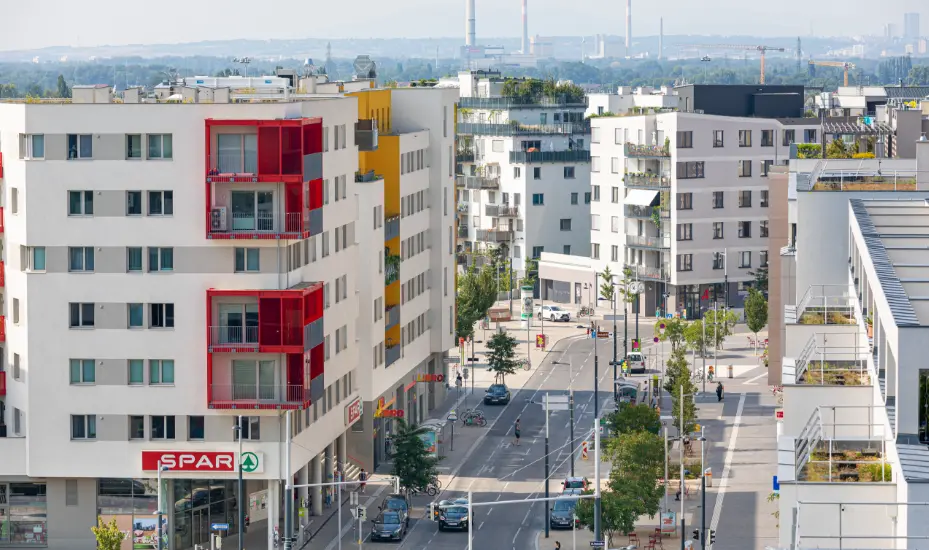
Seestadt - A piece of shit on the outskirts of Vienna
In my hometown of Vienna, Austria a few years ago they have built the archetypal "modern architecture" settlement. It's called "Seestadt" and
consists of a bunch of offensively stupid looking houses with vast areas of pure concrete between them -- almost no trees.
You can't even make this shit up. I've been there once during summer and almost got a heat stroke from walking through the area.
Apparently a Swedish architect created it -- if it's Swedish it must be good, right? This project may have worked out for Swedish
summers (it would still be idiotic) but not in the ones we have in eastern Austria. It gets HOT AS FUCK in summer here -- nowadays easily up to 35 degrees celsius!
This stupidity is inconcievable -- they had massive space to plant trees but chose not to. But why? I don't think an issue as easily
addressable as that can possibly be an oversight.
A friend that I have talked to about this topic made an interesting point which explains the reason they choose
to do so. The lack of trees, the wide streets and by that effect no place to hide -- it's indeed not a coincidence and
there are historical reasons for this.
Beginning in around 1850, Viennas Habsburg monarchy considered a new urban planning model as a reaction to the 1848 revolutions.
The idea was to build wide and open so the population could be easily monitored, minimizing any chance of the populace revolting.
The entire project was
overseen by military strategists. Until that point, narrow and winding streets have been the norm. If we extrapolate
to architecture these days, is it so far off to think that the way "Seestadt" as well as most other modern building projects
have been built is directly or indirectly an offspring of this idea?
False equivalences
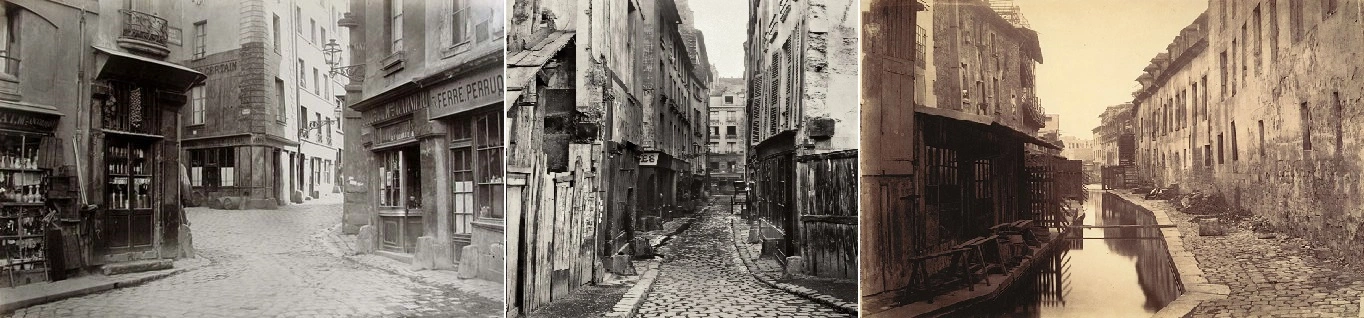
I remember watching a video by a youtuber named Alex O' Connor talking about this topic. The interviewee in question whos name I am too lazy to look up proposed the point (in defense of modern architecture) that between 1853 and 1870 an architect, I want to wash out my mouth for even uttering this name, Georges-Eugène Haussmann, was contracted by another completely sick individual, Emperor Napoleon III to demolish vast areas of the Paris inner city to rebuild it with the now "iconic" neoclassical style buildings. Remember my point about Viennese monarchist urban planning? Yeah, they were directly inspired by the French monarchy. These people are scum and the root of all evil.
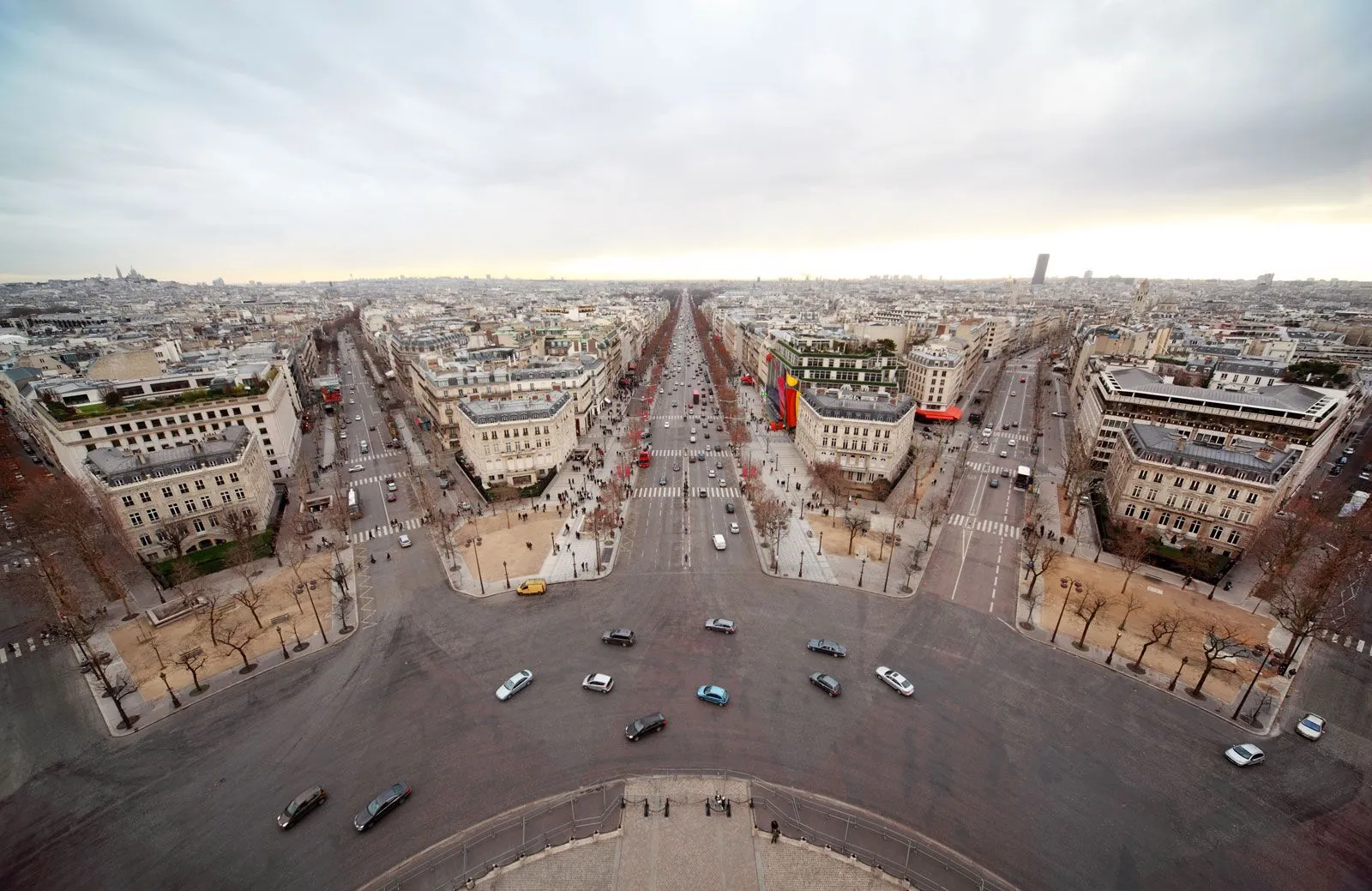
The cultural loss is obviously immense -- this was also correctly recognized as such back then by vast amounts of the population.
Anyway, the point the person in the video was making was that back then this was very controversial, and now that some time
has passed we see these types of buildings as archetypical parisian -- giving that city it's specific charme, equating this to the process
that is happening here and now with modern architecture replacing older buildings -- people simply tend to
aestheticize the past and if enough time passes what is now being constituted as "modern architecture" will be viewed as aesthetic
by future generations. I find this statement to be incorrect at heart and one of the most gaslighty ones. This is the point
where I decided to write this piece.
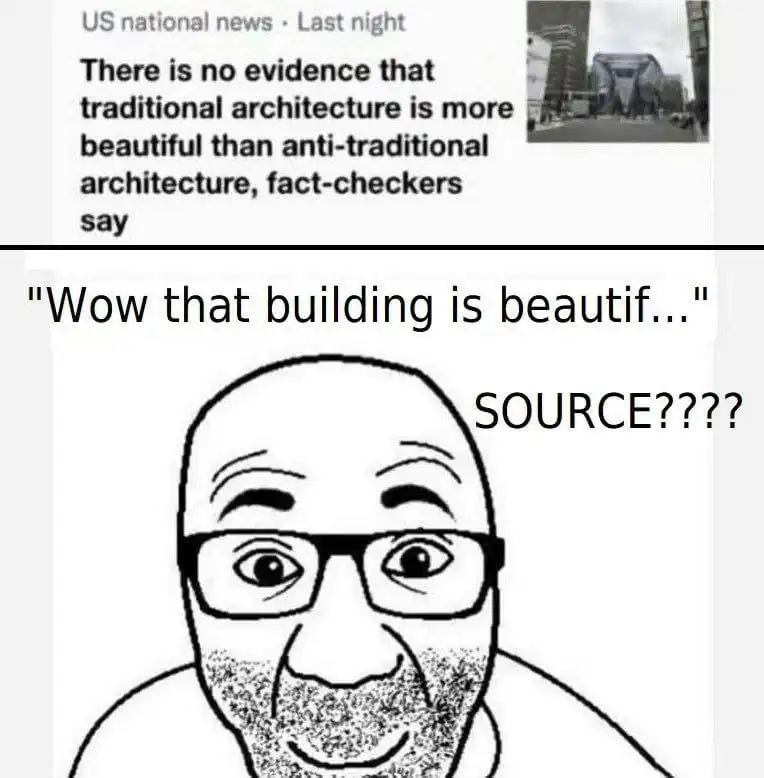
The aesthetication of the past is a common phenomenon (and a bad impulse, but I don't want to digress), however just taking any change that was made in the past and match it to today
is a fallacy. You can't just equate the quality and degree of something and apply it to any circumstance. Where suddenly are all the "nuances" and the "grey areas" these liberals
love to raff about all day? Take for
an example the single family home suburbs in the USA and "brutalist" housing projects from the USSR. Both emerged at about, give or take a
few years, the same time. Today, suburbs are considered as uniquely ugly while the krushchevkas, commonly referred to as "commieblocks" are loved
and already romanticized (there are entire communities on the internet revolving around the magic of these buildings). It is difficult for me to just outline the appearance of "commieblocks" because their significance relied on offering a better living conditions for the working class and I feel a bit disgusting looking at it from an aesthetic perspective but they unquestionably have been a gigantic influence in the sphere of architecture from an artistic standpoint as well -- Brutalism is extremely popular. I don't need to point out more of the socioeconomic advantages of the soviet krushchevkas too much, as they are obvious. Also, refer to my statement at the beginning of this rant.
Of course there are countless other points in comparing the suburbs in the USA and commieblocks in the USSR (and by extension most of Eastern and Central Europe) -- you could write several books just about the comparison between these two --
but for the sake of disagreeing with that argument I want to stay within this lane.
That being said, I do believe that our contemporary architecture will have a unique dystopian aesthetic quality applied to them someday.
I believe that there will be a label such as "late stage capitalist architecture" or something similar in that tone.
Also, just fuck them. I simply do not buy their bullshit. There IS a special awful quality about modern architecture and I will not let myself be gaslit by this false equation of circumstances.
The only thing that slightly comforts me is imagining how Haussmann must be burning in hell right now for the what he has done.
Okay, so any better ideas?
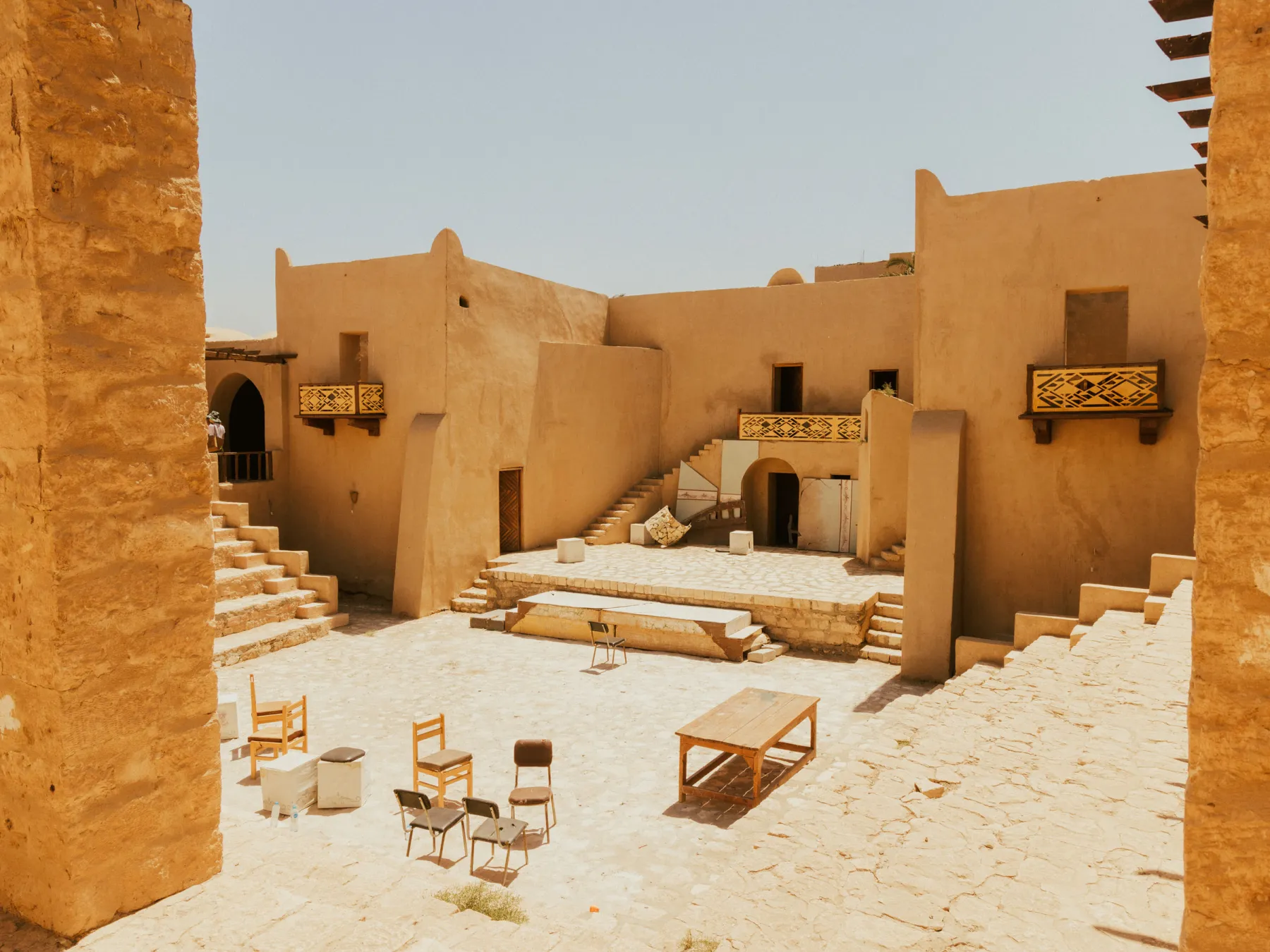
Since we have now assessed that modern architecture is SHIT and BAD, and you, dear reader, will surely have agreed with all of my points, the question is what to do? First of all: I definitely do NOT endorse spraypainting these buildings! That would cause property damage, okay? Secondly: As of now we probably have to live with the fact that this is the type of architecture of our current era and there is little we can do about it. As long as capitalism exists there can't be a solution to this. But I don't want to be pessimistic! Let's assume that we are able to have a proletarian revolution and city planning and architecture is maintained by the people rather than some bored swedish snob. I personally believe in building in the style of vernacular architecture with my personal role model being the Egyptian architect Hassan Fathy. Just a very brief introduction: He was commissioned to plan a new city along the Nile river. Mr. Fathy, before designing the city, lived among the local people, applied their ideas and needs to the plan, studied the local Nubian culture and modeled the buildings according to these factors. Please take a look at this short article about his work to better understand what he was about, if you want to read more check out his book Architecture for the poor.
"(Hassan Fathy) lived among the villagers of Gourna, trying to advise and organize the latent architectural and artistic forces existing among the villagers and, through their corporation, to achieve a well-organized and alive human settlement."
His plan in New Gourna has ultimately failed. These days, the buildings in New Gourna are in decay -- The building materials he used weren't optimal and should've gone beyond trying to strictly adhere to regional materials. One can learn from this mistake and improve from there. This is what I am advocating for: A dialectical approach taking the scientific advancements of modernity to fulfill the material necessities while applying vernicular elements of each region by combining the local knowledge and culture with the current needs and wants and of the people living there. Now, let me close this article with another quote from this excellent book which was one of the inspirations for the content of this rant:
"There is much to learn from architecture before it became an experts art. The untutored builders in space and time—the protagonists of this show—demonstrate an admirable talent for fitting their buildings into the natural surroundings. Instead of trying to “conquer” nature, as we do, they welcome the vagaries of climate and the challenge of topography." - Bernard Rudolfsky, Architecture without Architects, 1964